


The Excavations
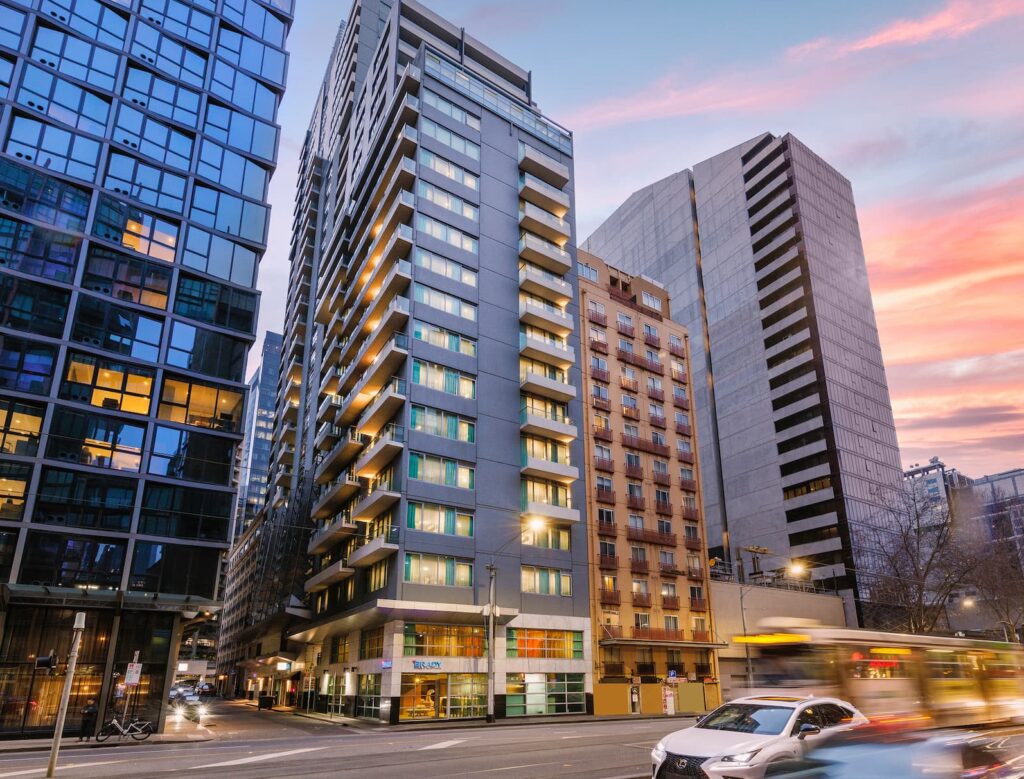
In 2023, Brady Group Pty Ltd commissioned Dr Vincent Clark Archaeology & Heritage to conduct an archaeological excavation in accordance with Heritage Victoria legislation, prior to the planned construction of the 31-storey residential hotel at 274-278 Little Lonsdale Street, Melbourne.
The excavations uncovered features and artefacts related to the property’s early Colonial occupation. These included the discovery of a ‘wattle-and-daub’ or ‘slab hut’ style dwelling, the remains of which were associated with numerous artefacts linked to Edward and Elizabeth Pope and their small family’s initial occupation of the property in 1847. The structure was represented by a dense wood-and-timber deposit, the remains of building stumps, and a yard surface. This early occupation is a significant research finding, reflecting early Melbourne Town during its formative years.
During this time, Melbourne’s residents did not have access to a plumbed water supply, and many residents relied on collecting rainwater for both domestic and commercial use. A timber barrel was found, buried well below later buildings erected on the property and is thought to have been used for this purpose.
From 1850, Melbourne’s Gold Rush ushered in a significant influx of wealth into the economy. This is reflected in the large two-storey masonry building erected by Edward Pope in 1855 and the construction of a forge in 1850, which was later replaced and upgraded to a timber-built forge.
The footprint of the Pope family residence was largely preserved as a series of stone footing alignments that defined room spaces with fireplaces. A stone-lined pit, which was later converted into a ‘privy’, was attached to the rear of the residence, and the yard areas were paved with stone and brick. Inside the residential building, the remains of ‘occupation deposits’ were found, which tell of the lives of the people who once lived there. The residential building erected in 1855 stood for over 80 years, with artefacts gradually lost through cracks in the floorboards, representing not just the Pope family but also later residents who occupied the property into the 20th century.
The remains of the blacksmith building were marked by large timber posts braced with timber logs, two large stone forge fireplaces—the working forge—and an extensive deposit of cemented and hardened metal and charcoal that had built up over the dirt floor of the forge due to various forging and smelting activities.
Later phases of occupation associated with commercial and manufacturing activities were also uncovered – particularly those related to Wynand Zevenboom and J. Thompson, and later Wynand’s brother, John Zevenboom, operating as J. Zevenboom and Co., brush manufacturers. These include the shop front and factory building, built by Zevenboom and Thompson in 1877, with excavated remains including stone footings and numerous timber stumps that would have once supported the timber floor of the shop, which fronted Little Lonsdale Street.
In the 20th century, J. Zevenboom and Co. expanded significantly, and a large four-storey factory building was constructed at the rear of the property. Later, in 1935, the long-standing residential building, along with the shop 21 | P a g e
and factory built in 1877, was demolished, and a three-storey factory was built along the Little Lonsdale Street frontage. The concrete slab of the factory floor had sealed beneath it a rich archaeological record that documented the occupation of the property from 1847 to 1935.
The 274-278 Little Lonsdale Street Site emerged as a highly significant and historically rich archaeological site, with well-defined depositional and site-occupation phases. The excavations provided a valuable opportunity to investigate the mixed residential and industrial character of Melbourne’s early urban landscape as it developed in the 19th and 20th centuries.
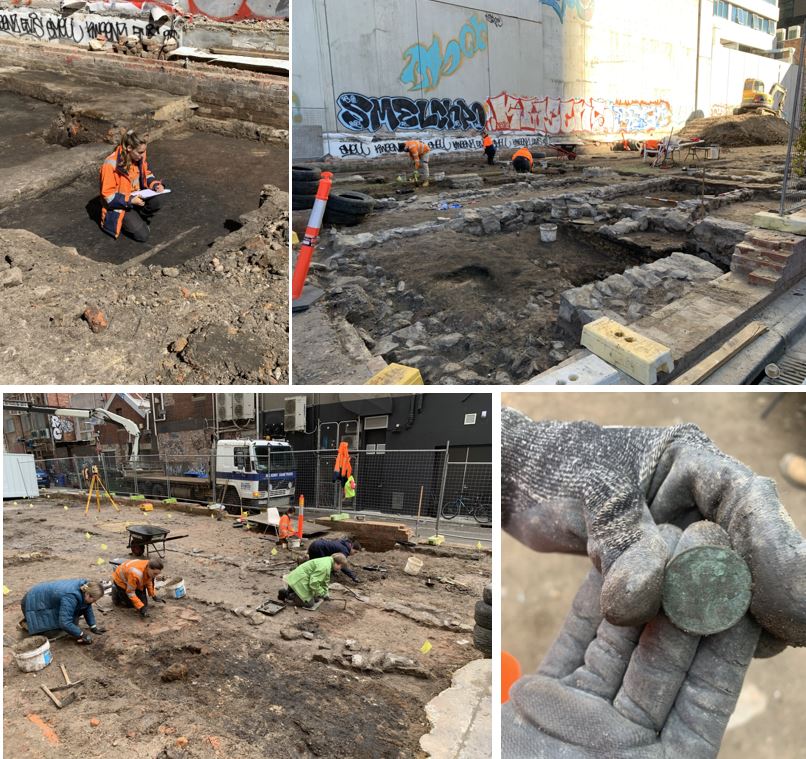
The archaeologists at work
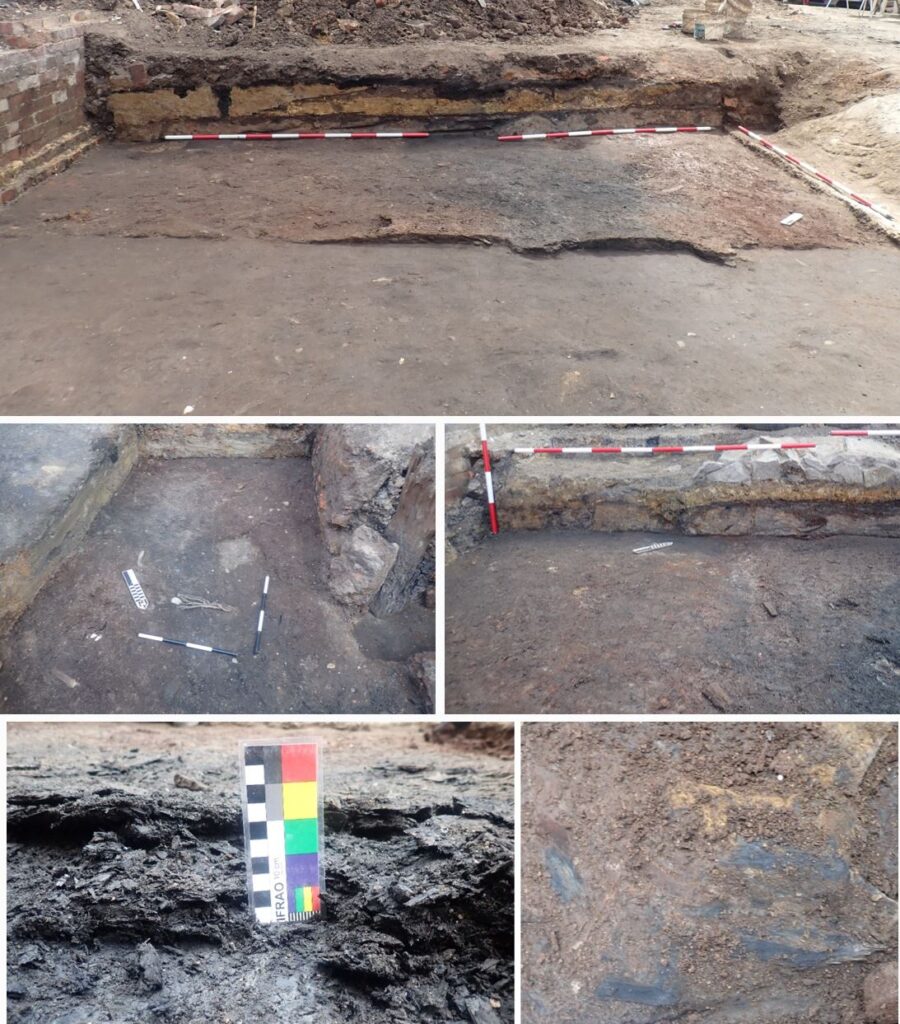
The remains of the early wattle and daub or slab style hut dated to c.1847
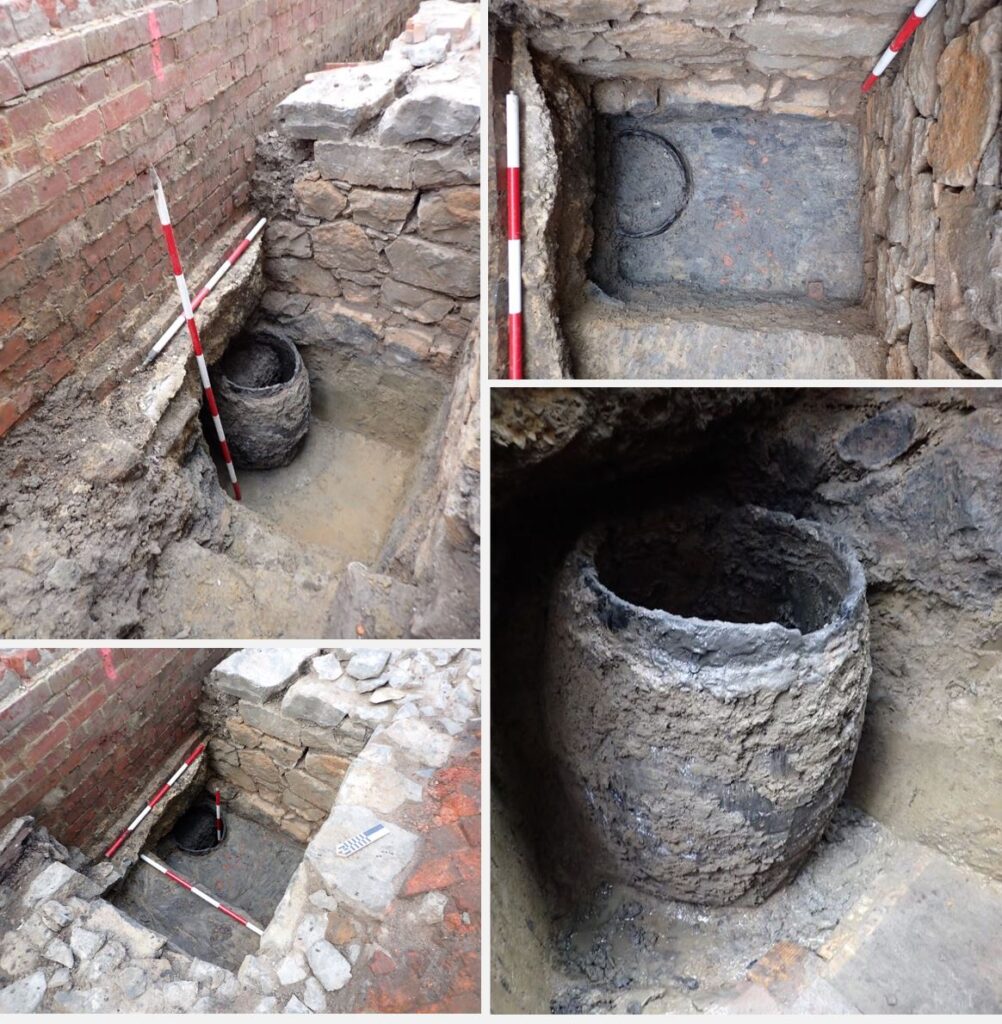
A deeply buried timber barrel, re-used to collect water
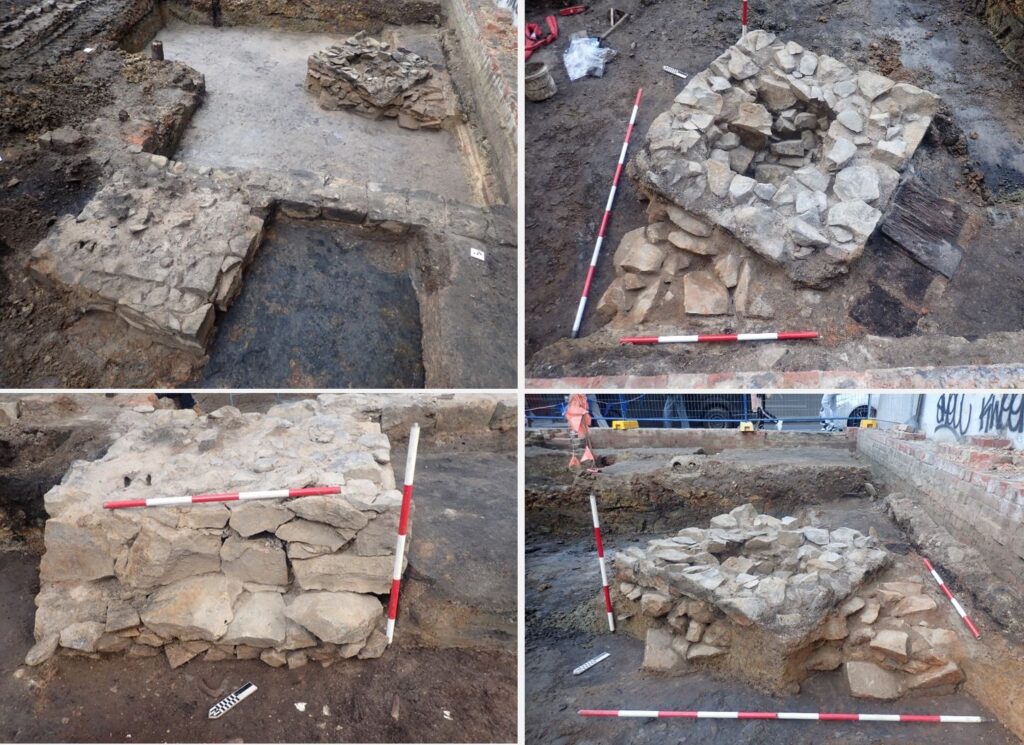
The blacksmith forge and fireplaces built in 1850
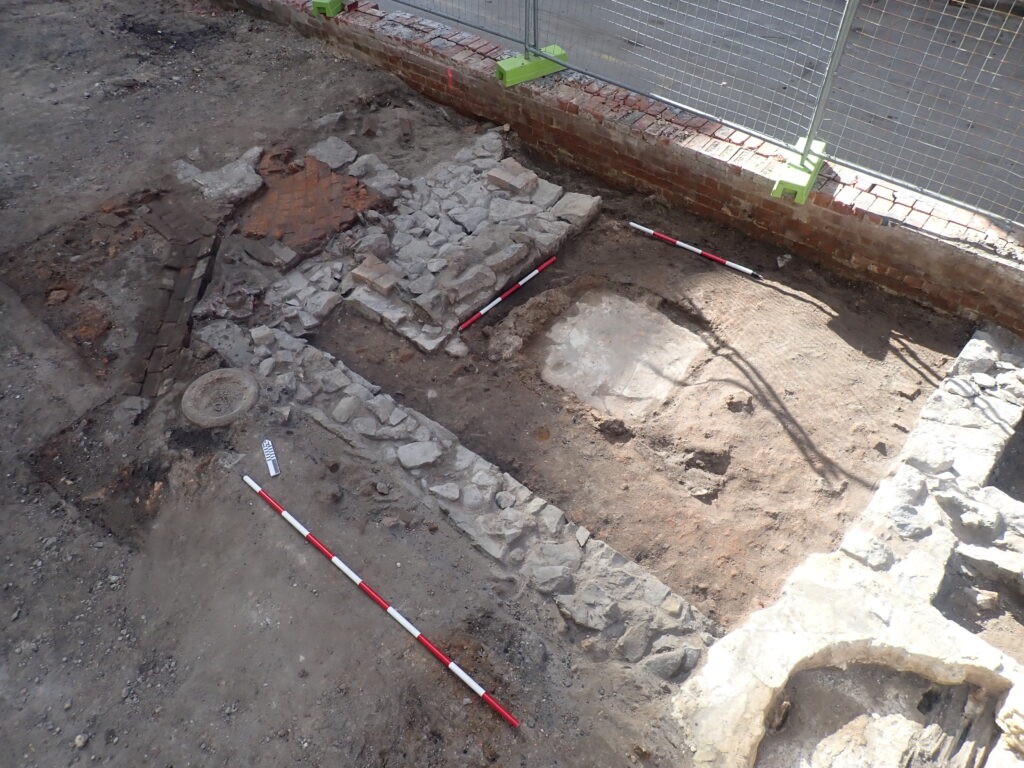
A large stone fireplace in what was once a room- perhaps the Pope family’s kitchen. Also visible is drainage and paving covering the yard.
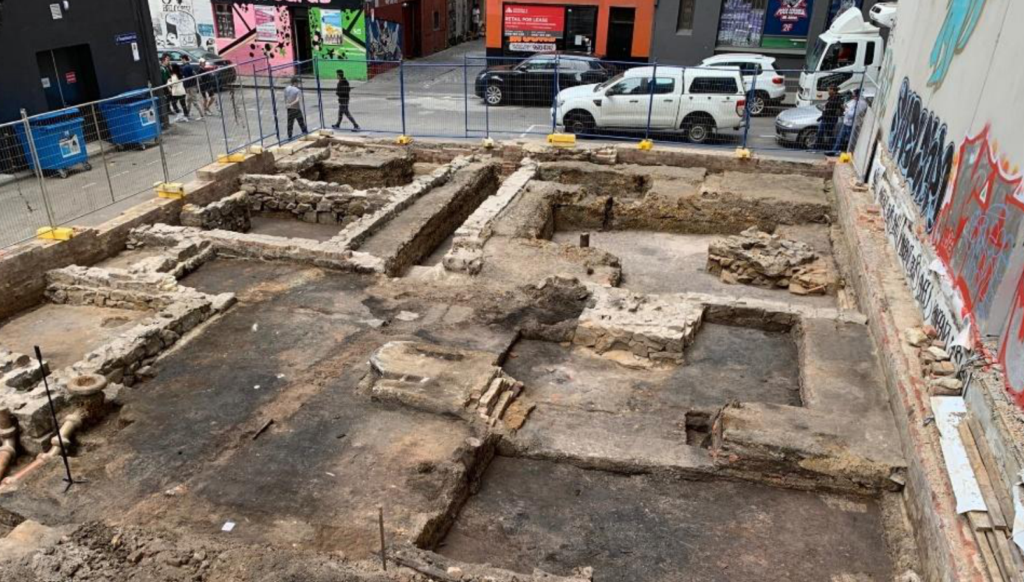
Overview of the archaeological features excavated, fronting Little Lonsdale Street.